
Train Right
Elevate your chicks’ feeder to 6 inches for healthier growth and stronger legs.
Predict the future
Think of a young Olympic athlete—someone who starts training early, maybe like Simone Biles or Michael Phelps. Their success doesn’t come overnight. It comes from structured training, proper conditioning, and gradual progression.
🏅 Early Athlete Training for Olympics
An athlete who begins early gains powerful advantages:
Muscle memory & coordination – movements become natural and precise
Stronger bones and joints – built gradually to avoid injury
Discipline & timing – they learn when to attack, when to rest
Explosive power – like jumping, turning, and quick reaction
Injury prevention – training is adjusted to their level, not forced too high too fast
👉 The key principle: progressive elevation — you don’t push too high too early.
🐥 Applying the Same Principle to Chicks (PVC Feeding System)
Your idea of raising a DIY PVC feeding system is very similar to athletic training.
✅ Why Raise the Feeder (About 1 Month Old Chicks)
At 1 month old, chicks are stronger, more active, and ready for a slightly elevated system.
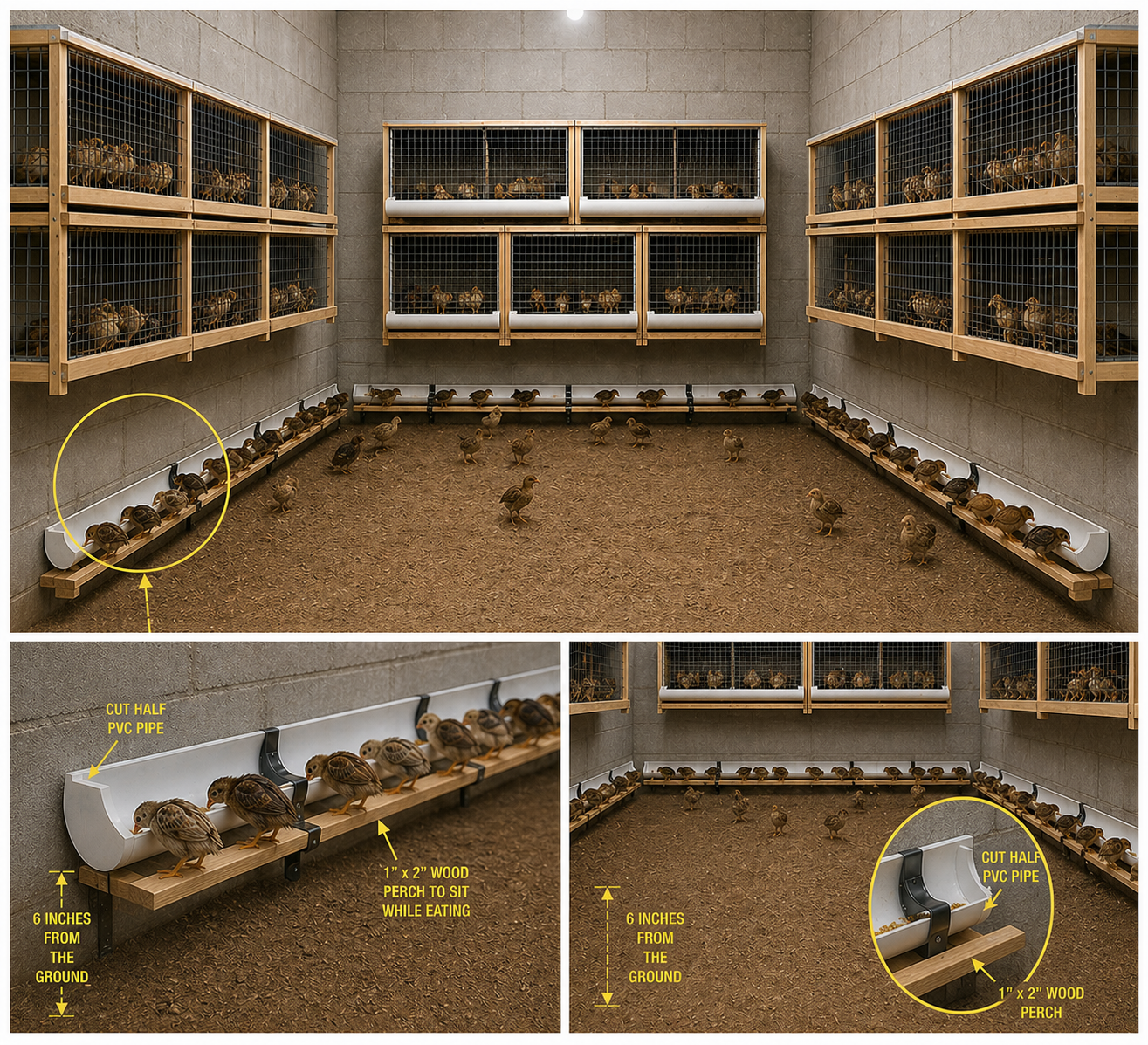
Raising the feeder (PVC half-pipe) to about 6 inches only gives these benefits:
1. Clean Feeding (Like Proper Nutrition in Athletes)
Keeps feed away from dirt, manure, and bedding
Reduces disease risk
Promotes healthier growth
2. Less Feed Waste
Chicks cannot scratch inside the feed easily
Prevents throwing feed around
Saves cost and improves efficiency
3. Better Body Posture
Eating at chest/back level improves posture
Supports natural feeding behavior
Helps digestion and comfort
4. Improves Activity & Strength
Slight elevation encourages movement and balance
Similar to training drills in athletes
Supports leg strength and coordination
⚠️ Why ONLY 6 Inches (Very Important)
Just like an athlete should not jump too high too early…
👉 Too high = injury risk
If the feeder is higher than 6 inches for 1-month chicks:
❌ Chicks may jump and fall, causing leg injury
❌ Weak chicks may fail to reach food → poor growth
❌ Can cause stress and uneven feeding
❌ Risk of chest or wing injury from repeated jumping
Proper guideline:
Feeder height should be around the chick’s back level
🧠 Simple Analogy
Olympic athlete → trains step-by-step to avoid injury
Chicks → feeder height must increase step-by-step
👉 Too low = dirty & wasteful
👉 Too high = dangerous
✔️ Perfect balance = 6 inches (for 1-month chicks)
🔧 Practical Tip (Your Design)
Since you're using:
PVC cut in half (feeder)
Wall-mounted system
Elevated cage (3 ft from ground)
👉 Add:
1×2 wood perch in front
Helps chicks stand comfortably while eating
Prevents slipping and crowding
🔥 Final Insight
Raising chicks is like training future champions.
If you manage:
proper height
proper timing
proper structure
👉 You produce strong, fast, and well-conditioned birds — just like Olympic athletes built from early discipline.
Training Chicks Like Champions
Just like young athletes, chicks thrive with gradual, thoughtful training—starting with the perfect feeder height for healthy growth.


150+
15
Proven Results
Trusted
FAQ
Why raise feeder?
Raising feeder keeps feed clean and reduces waste.
How high to raise?
Raise feeder about 6 inches for one-month-old chicks.
What happens if too high?
Too high causes injury risk, stress, and uneven feeding among chicks.
Why not too low?
Too low leads to dirty feed and more waste.
Any tips for design?
Add a 1×2 wood perch for comfort and stability.
How does this relate to athletes?
Like athletes, chicks need gradual training to grow strong and avoid injury.
Services
We offer high-quality poultry breeding focused on strong genetics, healthy stock, and consistent bloodlines. Our services include selective breeding, breeding stock sales, chick production through controlled hatching, and bloodline development. We also provide farm consultations, nutrition and health management, and custom breeding programs tailored to customer needs.
Dining
Rentals
09184291989
© 2026. All rights reserved.