
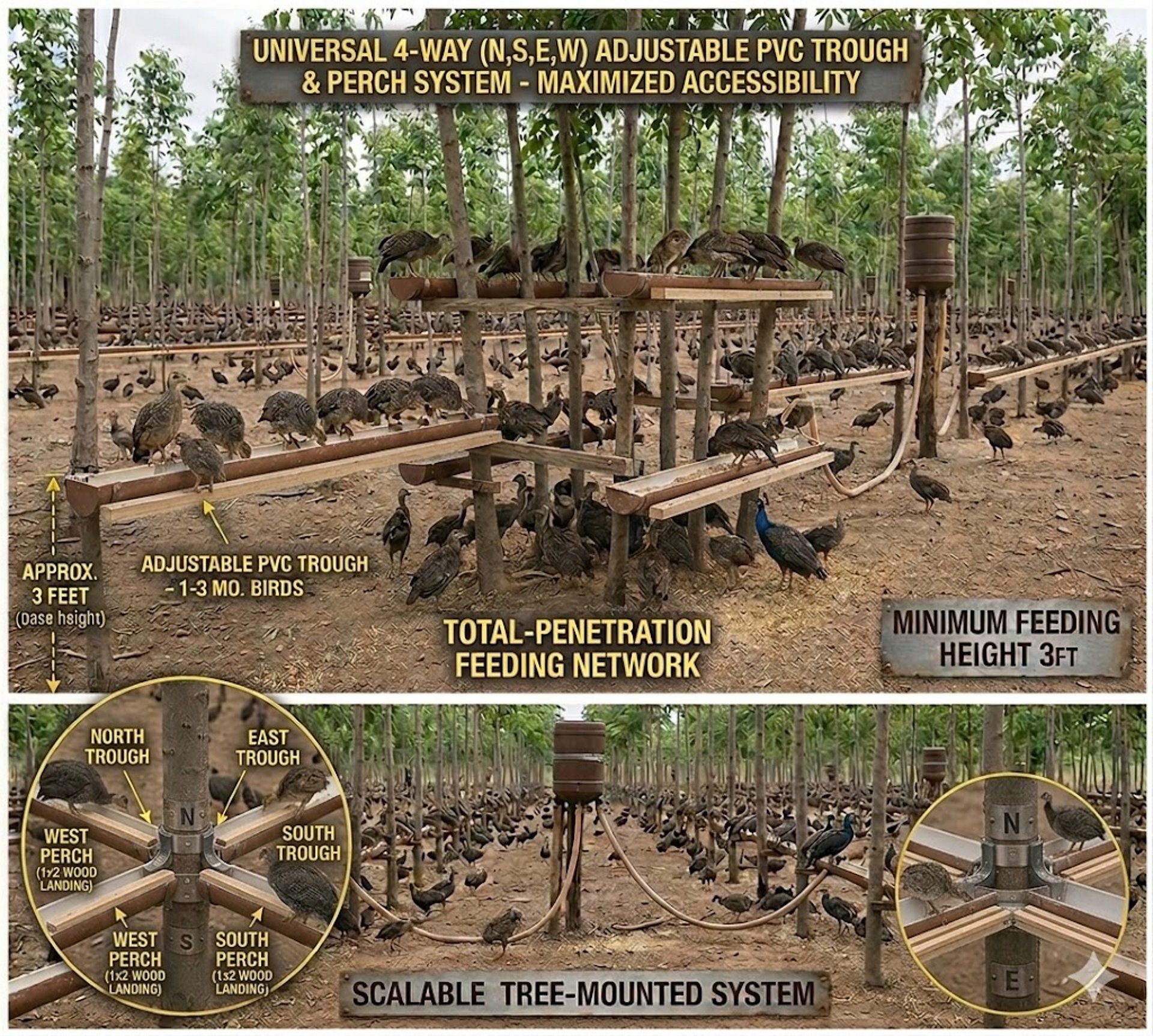
Daily Routine
Step-by-step guide for game fowl handlers starting at dawn
🐔 COMPLETE GAMEFOWL TRAINING SYSTEM (EXPLAINED FOR HANDLERS)
🕠 DAILY START TIME: 5:30 AM
This is a step-by-step operational guide, not just a timetable.
🟢 STAGE 1: 1–3 MONTHS OLD
“FOUNDATION STAGE (NO STRESS TRAINING)”
🎯 PURPOSE (WHY THIS STAGE MATTERS)
At this age, birds are like “building a frame.”
You are NOT training for fighting—you are:
building bones
improving balance
developing natural movement instincts
preventing weak joints later
🌅 5:30–6:00 AM — BASIC CARE ROUTINE
🧑🌾 WHAT THE HANDLER DOES:
Open pens carefully (no sudden noise)
Check each bird quickly:
standing normally?
eating well?
no limping or drooping wings?
Change water (always clean)
Give light feed (not heavy)
📌 WHY THIS IS IMPORTANT:
Early detection prevents disease spread.
✅ GOOD RESULT:
Birds are alert, active, and immediately move toward food.
🪵 6:00–6:30 AM — LOW PERCH INTRODUCTION
🧑🌾 WHAT TO DO:
Use very low perch (just above ground)
Let chicks naturally jump on/off
Do NOT force them
Keep session short (5–10 minutes active time)
📌 PURPOSE:
Develop early leg strength
Teach balance control
Build confidence in movement
⚠️ COMMON MISTAKE:
Forcing repeated jumps = injury risk
✅ GOOD RESULT:
Bird jumps freely without fear and lands steadily.
🌿 7:00–9:00 AM — FREE RANGE MOVEMENT
🧑🌾 WHAT TO DO:
Release birds into safe grass area
Let them:
walk
scratch ground
chase insects
flap wings naturally
📌 PURPOSE:
This is natural gym training
strengthens tendons
builds stamina
improves coordination
✅ GOOD RESULT:
Birds spread out, active, and constantly moving.
🪢 4:00–4:30 PM — LIGHT SWING INTRO
🧑🌾 WHAT TO DO:
Place bird on controlled swinging perch
Very slow movement only
Observe balance reaction
📌 PURPOSE:
introduces motion balance
prepares nervous system for movement control
⚠️ WARNING:
If bird panics → stop immediately
✅ GOOD RESULT:
Bird adjusts body posture while swinging, not falling or panicking
🟡 STAGE 2: 3–6 MONTHS OLD
“ATHLETIC DEVELOPMENT STAGE”
🎯 PURPOSE:
Now we build:
strength
reflex
wing coordination
controlled movement under pressure
🌅 5:30–6:00 AM — ROUTINE CARE
🧑🌾 WHAT TO DO:
Check health (eyes, feathers, stance)
Clean water
Controlled feeding (not overfeeding)
📌 WHY:
Overfeeding = slow bird = weak conditioning result later
🪵 6:00–6:45 AM — PERCH JUMP TRAINING (MAIN WORKOUT)
🧑🌾 WHAT TO DO:
Use medium-height perch (safe but challenging)
Let bird jump up and down repeatedly
🔁 STRUCTURE:
10–15 jumps
Rest 30–60 seconds
Repeat 3 rounds
📌 PURPOSE:
builds explosive leg power
strengthens joints
improves takeoff speed
⚠️ COMMON MISTAKES:
too high perch
too many repetitions
no rest
✅ GOOD RESULT:
Bird jumps quickly, lands stable, and repeats without hesitation.
🌿 7:00–8:00 AM — FREE RANGE CONDITIONING
🧑🌾 WHAT TO DO:
open field movement
allow running and wing flapping
uneven terrain is good
📌 PURPOSE:
stamina building
muscle endurance
natural athletic development
✅ GOOD RESULT:
Bird keeps moving without sitting too long.
🎯 10:00–10:45 AM — FAKE CHICKEN MANEUVER
🧑🌾 WHAT TO DO:
use dummy or controlled target
simulate “approach and retreat”
🔁 STRUCTURE:
5–10 sec engagement
rest 30–40 sec
repeat 6–10 cycles
📌 PURPOSE:
reflex training
timing control
decision making (attack vs retreat)
⚠️ MISTAKE:
Too long chasing = fatigue, not training
✅ GOOD RESULT:
Bird reacts fast, stops quickly, and repositions intelligently.
🪢 3:30–4:15 PM — SWING TRAINING
🧑🌾 WHAT TO DO:
place bird on controlled swing perch
allow movement in controlled direction
📌 PURPOSE:
wing strength
balance under motion
stability during instability
✅ GOOD RESULT:
Bird stays balanced, adjusts posture naturally
🟠 STAGE 3: 6 MONTHS AND ABOVE
“PERFORMANCE & CONTROL STAGE”
🎯 PURPOSE:
Now the bird is shaped for:
speed execution
timing intelligence
controlled aggression
stamina under pressure
🌅 5:30–6:15 AM — FULL ROUTINE
🧑🌾 WHAT TO DO:
full feeding (balanced energy)
health check
sunlight exposure
📌 PURPOSE:
prepares energy system for training
🪵 6:15–7:00 AM — HIGH PERCH EXPLOSION
🧑🌾 WHAT TO DO:
higher perch (safe but challenging)
jump + reset drills
📌 PURPOSE:
explosive power
fast recovery after landing
✅ GOOD RESULT:
Bird jumps quickly and resets instantly for next jump
🌿 7:30–8:30 AM — ENDURANCE FREE RANGE
🧑🌾 WHAT TO DO:
large area movement
uneven ground if possible
📌 PURPOSE:
stamina under real conditions
muscle endurance
🎯 10:00–11:00 AM — ADVANCED FAKE CHICKEN
🧑🌾 WHAT TO DO:
simulate attack scenarios
include evasion practice
📌 PURPOSE:
fight intelligence (not just aggression)
timing precision
🪢 3:00–4:00 PM — FAST SWING CONTROL
🧑🌾 WHAT TO DO:
faster swing movement
short balance corrections
📌 PURPOSE:
reaction speed
air balance control
📊 SIMPLE HANDLER SUMMARY
🟢 1–3 MONTHS:
👉 Care + balance + natural movement
🟡 3–6 MONTHS:
👉 Strength + reflex + structured training
🔴 6+ MONTHS:
👉 Speed + intelligence + control under pressure
⚠️ FINAL HANDLER RULES
Always observe before training
Never force birds
Keep sessions short and clean
Clean water daily = health stability
Rest is part of training, not laziness
FAQs
When to start training?
Begin training at 1 month old with gentle care routines.
How to handle stress?
What daily tasks matter?
How to improve leg strength?
Why free range important?
Avoid forcing jumps; keep sessions short and calm.
Daily early checks include health monitoring, clean water, light feeding, and observing balance.
Use low perches first, then move to medium heights; allow repeated, rested jumps.
Free movement builds stamina, natural coordination, and muscle endurance.


Training
Step-by-step daily care and exercise routines


Daily Routine
Step-by-step guide for gamefowl handlers to train healthy, strong birds
Foundation Stage
Build bones, balance, and natural movement in young birds


Athletic Stage
Strength and reflex training with controlled perch jumps and free range


Following this guide, my birds grew stronger and more balanced every day.
Joe K.


The step-by-step training made daily care simple and effective for my flock.
Ann B.


★★★★★
★★★★★
Services
We offer high-quality poultry breeding focused on strong genetics, healthy stock, and consistent bloodlines. Our services include selective breeding, breeding stock sales, chick production through controlled hatching, and bloodline development. We also provide farm consultations, nutrition and health management, and custom breeding programs tailored to customer needs.
CONTACT:
Rentals
09184291989
© 2026. All rights reserved.

Angelo Rosaroso Vale, Jr.